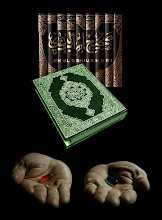
The writing and documentation of the Sunnah is an interesting and important part of our Islamic history. The Ahl'ul-Hadith or the Traditionists did not distinctly emerge in Muslim society until the second Islamic century, more than a hundred years after the Prophet's death.
There is a big gap between the Prophet and the first legal digest that contains some traditions, i.e.the Muwatta' of Imam Malik (d. 179 AH). It is historically known that the `four guided caliphs'— close companions of the Prophet — not only did not leave us any collection of traditions, they did not make use or made very little use of traditions.
Nevertheless, against all odds, the Traditionists prevailed in insisting the hadith/sunnah was binding on the Muslims from the beginning. They claim to derive this authority for the hadith from the Quran itself, as we shall presently show. They cannot do otherwise than make this claim, for without the authority of the Quran as the basis of its legitimacy, the hadith is automatically rejected. It will be seen that this claim is false.
They put forward four principal arguments.
Firstly, the hadith is also Divine revelation.
Secondly, God's command to the believers to obey the messenger means that they must uphold the hadith.
Thirdly, the Prophet is the interpreter of the Quran and the hadith is necessary in order to understand and carry out Quranic injunctions. Fourthly and lastly, the Prophet is an example for the believers to follow, and his sunna is binding on the believers.
It seems obvious that obedience to the messenger in the above verse and in other similar verses means obedience to God, since the messenger is not an independent agency. As messenger, he was the agency that delivered the message, and obedience to him was equivalent to obedience to God. As stated in the Quran several times, "The sole function of the messenger is to deliver the message."
It should be noted that the Quran uses the word `messenger' and not `Muhammad'. The obedience is, therefore, to the messenger, that is, to the message that he brought from God.
In short, God and messenger in this context constitute one concept which should not be separated.
In all its details, the reader of this history can find all the indications that God permitted the corruption of the so called Hadiths and Sunnah of the Prophet Muhammed as He told us in 6:112-113.
God repeatedly told us in the Quran that His book, is complete, perfect and fully detailed, see 6:19,38,114,115; 50:45, 12:111, and if He so willed He would have given us hundreds of books, not just one QURAN, see18:109 and 31:27.
How then can the hadith writers insist that the Quran is incomplete when it also has every kind of example quoted for mankind's reference? The Quran therefore contains details for all our needs. The Quran states general principles in places where it would be too burdensome for us if God were to make strict rules. This is especially true when the Quran touches on socio-cultural matters as they differ from place to place and among different peoples.
As regards the Muslims, Muhammad brought them the Quran, described by God Himself as an invincible book, but no sooner did Muhammad die and leave them, they contrived to make Muhammad bring two books and, after bitter quarrels, they legislated, two hundred and fifty years later, that Muslims must uphold not only the Quran but also the hadith. However, in truth, since then, they followed the hadith rather than the Quran.
God knew that the Quran is enough and that those who do not find the Quran to be enough will be committing idol-worship by having people like Sahih Bukhari and company as partners with God, in setting the law for this great and perfect deen, see 9:36,12:40, 30:43.
The Hadiths that disallow the writing of it have the same roots which many of us reject. But if you look at it the other way, it only deepens the contradiction of Hadith. It shows that the Hadith is chiding itself for its narrations and yet it is going on narrating.
The rules for hadith science were not developed until the early 11th century, by Al-Hakim (d.1014) who developed 52 categories, and then Ibn al-Salah (d.1245) who developed 65 categories.Science of hadith perfect? Science of hadith came about because of mass corruption in the fidelity of hadith.
The Six authoritative (Sahih) hadith are compiled by:
Sahih Bukhari (810-870); Sahih Muslim (817-874); Daud (817-888); al-Tirmidhi (821-892); al-Nasai (d.915); al-Darimi (797-868); and Ibn Maja (824-886).
Muhammad’s authority following the Sunnah was developed posthumously, invented by the religious scholars as a device to wrestle power out of the hands of the Caliph.
The idea that Muhammad’s political power passed to the Caliph was invented at a later period (the early Abbasid- post 750 AD), when the idea of Muhammad's Sunnah was used to undermine the positions of the Caliphs (1986:26).
Besides, when I say that the writing of Hadith is not allowed, I don't take this information from the Hadith itself. Instead I take it from the authentic data of Islamic history. The fact that the according totheir own sources of Hadith, it's stated that the Prophet forbade people to write down his words, and also the fact that during the reign of Abu Bakr Siddiq and Umar bin Khattab thousands of Hadith were destroyed (BURNED) by them is well known and is found everywhere in Islamic history.
Majority of the Hadith narrations either have no link with the important values of the Qur'aan or they altogether clash with the ethics of the Qur'aan. Only a small amount of narrations conform with the Quraanic dictates. But even concerning few of those narrations that might conform with the Qur'aan, there is no reason to presume that these were mentioned by the Prophet is those words.
What came to be regarded by the Sunnites as the `Six Authentic Books' compiled by Bukhari, Muslim, Abu Daud, Ibn Maja, Tirmidhi and al-Nasa`i.
The four Shi'ite compilations are by al-Kulaini, Ibn Babuwayh, al-Murtada and Ja`afar Muhammad al-Tusi did not exist at the time of the Prophet's death, as the Quran did, but were made between 210 and 410 years later. Why were the compilations not made earlier?
Several modern hadith scholars claim that they possess new evidence to prove that the hadith were written down at the time of the Prophet. They were memorized and handed down from generation to generation until the second and third Islamic centuries when the official compilations were made.
The still unanswered question, even if we were to accept the claim, is this:
"Why was the official compilation not made earlier, especially during the time of the righteous caliphs when the first reporters, i.e., the eye witnesses, were still alive and could be examined?"
When we remember that there was an alleged statement by the Prophet, made at his final Pilgrimage Oration and heard by tens of thousands, exhorting his followers to hold on to the Quran and his sunna, it is most unreasonable not to expect the great early caliphs to order the writing down and compiling of the Prophet's sayings.
That none of them did so could only mean that the Prophet never made the statement, and that it was a later invention attributed to him.
Does not this fact alone show that the hadith was a new development, not sanctioned by the Prophet?
During the second caliph Abu Bakr's administration, Abu Bakr himself ordered the Prophet's secretary, Zaid ibn Thabit, to compile the Quran into book form, taking care that all its contents were corroborated by two or more witnesses.
When the third caliph, Uthman, prepared his official version of the Quran for dissemination throughout the length and breadth of Islam, he based it on this version. Thus, the Quran fully satisfies the requirements of a well-corroborated text.
Why was Hadith forbidden?
There are several hadiths that say Prophet Muhammad forbade his sayings from being recorded.
Abu Saeed al-Khudri said, “We exerted our best to get the Messenger of Allah to allow us to write his hadith but he refused.” Recorded by Al-Baghdadi in Taqyid al-Ilm
Narrated Zayd ibn Thabit:
Al-Muttalib ibn Abdullah ibn Hantab said:
Zayd ibn Thabit entered upon Mu'awiyah and asked him about a tradition. He ordered a man to write it. Zayd said: The Apostle of Allah ordered us not to write any of his traditions. So he erased it. [Sunan of Abu-Dawood Book 25, Number 3640:]
The reason most often given by Hadith followers as to why it was forbidden is formulated by Ramhurmuzi (d. 360 A.H.) as follows:
“Apparently the prohibition was in the beginning to make their attention to the Qur’an only and to distinguish the recording of the Qur’an from the sunnah (traditions) of the Prophet and to keep things safe from any kind of mixture or confusion.”
Muslims claim that in order for one to be a Muslim, one must uphold both the Quran and the Sunnah (Hadith) of Muhammad. Yet at the same time they claim that the Sunnah was not written down to prevent it from mixing with the Quran.
It seems to me that for the followers of the hadiths, Quran and Sunnah (Hadith) are one in the same. Any difference seems to be merely lip service. In reality, there is no distinction drawn, since both are equally binding according to them. However, in reality, as per the laws of Allah, it is only the Quran that is binding.
Some more hadith narrations which itself confirm the illegality of the Hadith institution, by confirming that the Prophet (pbuh) gave orders not to write anything except the Quraan.
1) Ibn Saeed Al-Khudry reported that the messenger of God had said,
"Do not write anything from me EXCEPT QURAN. Anyone who wrote anything other than the Quran shall erase it."
The following is reported to have happened 30 years after the death of the Prophet Muhammed and shows that the Prophet never allowed anyone to write anything except the Quraan till the end.
Those hadiths that claim or indicate that the Prophet later changed his mind and allowed the companions to write his sayings are considered fabricated or weak by the hadith scholars themselves.
But the following which was narrated 30 years after the passing away of the Prophet (pbuh) is enough to conclude the Prophet Muhammed never authorized the writing of the hadiths since the time he told his followers not to write anything except the Quran.
(2) From Ibn Hanbal:
Zayd Ibn Thabit (The Prophet's closest revelation writer) visited the Khalifa Mu'aawiyah (more than 30 years after the Prophet's death), and told him a story about the Prophet. Mu'aawiyah liked the story and ordered someone to write it down. But Zayd said. " the messenger of God ordered us NEVER to write anything of his hadith,"
(3) The famous book, "Ulum Al-Hadith" by Ibn Al-Salah, reports a hadith by Abu Hurayra in which Abu Hurayra said the messenger of God came out to us while we were writing his hadiths and said; "What are you writing?" We said, "Hadiths that we hear from you, messenger of God."
He said, "A book other than the book of God ?!" We said, "Should we talk about you?" He said, Talk about me, that would be fine, but those who will lie will go to Hell. Abu Hurayra said, we collected what we wrote of Hadiths and burned them in fire.
(4) In the famous book, "Taq-yeed Al-Ilm", Abu Hurayra said, the messenger of God was informed that some people are writing his hadiths. He took to the pulpit of the mosque and said, "What are these books that I heard you wrote? I am just a human being. Anyone who has any of these writings should bring it here. Abu Hurayra said we collected all these and burned them in fire.
(5) Ibn Hanbal in his Musnad book, narrates a hadith in which Abdullah Ibn Omar said, "the messenger of God one day came out to us as if he was going to depart us soon and said, "When I depart you (die), hold to the book of God, prohibit what it prohibits and accept as halal what it makes halal."
No mention of the Sunnah.
(6) Again, in the book "Taq-yeed Al-Ilm", Abu Saeed Al-Khudry said, " I asked the messenger of God a permission to write his hadiths, but he refused to give me a permission."
(7) The farewell Pilgrimage of the Prophet Muhammad is a corner stone in the Muslim history. The Final Sermon given by the Prophet during this pilgrimage was witnessed by tens of thousands of Muslims. Yet there are THREE versions of this sermon in the Hadith books. This by itself reflects the degree of corruption of the Hadith books as this is the most witnessed speech of the prophet Muhammad.
Prominent figure who was a rejector of Hadith
Abu Bakr at one point was not sure whether to keep what he knows of hadiths or not. He had collected 500 Hadiths during very long companionship of the Prophet Muhammed, but he could not sleep the night until he burned them.
Umar ibn al-Khattab and the Question of Hadith
Umar ibn al-Khattab was among the most important early Muslims, one of Mumammad’s closest companions, a champion of Islam, and the second man to lead the Muslim community after Mumammad’s death. As the second of the four rightly guided Caliphs (al-khulafa’ al-rashidun), Umar’s reputation for piety and dedication to Islam has been both legendary and unquestioned among Sunni Muslims throughout history. His opinions on religious matters are also highly respected.
Umar is a lightening-rod figure in the controversies over Hadith. Scattered throughout various genres of Islamic literature from the third/ninth century onward are reports that ascribe to this legendary figure strong objections to the writing and transmission of Hadith.
Taken together, the details of these stories make a powerful impression and corroborate that in these stories Umar “radically separated the authority of the Messenger from his Message . . . [and] distinguished the Book as an independent truth source to which no stipulations could be made.”
This is a particularly important aspect of the controversies over the Hadith as a source of scriptural authority because that authority rests on the belief in Prophetic authority and the duality of revelation.
Umar in al-Tabaqat al-Kubra
The first story Ibn Sad narrates about Umar’s attitude toward the recording of the Hadith occurs in the section where he recounts his appointment as Caliph (Dhikr istikhlaf Umar).
He cites a story from Sufyan ibn Uyayna (d. 198 AH), on the authority of al-Zuhri that “Umar wanted (arada) to write the Traditions (al-sunan), so he spent a month praying for guidance; and afterward, he became determined to write them. But then he said:
‘I recalled a people who wrote a book, then they dedicated themselves to it (aqbalu 4alaihi) to it and neglected the Book of God (wa-taraku Kitab Allah).’”
which reminded me of Prophet Muhammad who said that his people (Muslims)DESERTED/ABANDONED the Qur’aan:
Qur’aan 25:30
وَقَالَ الرَّسُولُ يَا رَبِّ إِنَّ قَوْمِي اتَّخَذُوا هَذَا الْقُرْآنَ مَهْجُورًا
"The Messenger said, “My Lord, my people have deserted this Qur’aan."
The wording of this story is very direct and leaves no doubt as to what Umar feared might happen if he were to commit the Traditions (al-sunan) of the Prophet to writing: that, like people before them, Muslims might turn their attention to that book and neglect the Qur’an. Who those people were is not specified in this story.
The next story that Ibn Sad recounts about the Commander of the Faithful (Umar) and his attitude toward the Hadith is found in volume five of the Tabaqat.
It is related on the authority of al-Qasim ibn Mumammad ibn Abi Bakr al-Siddiq (d. 106 AH)—the grandson of Abu Bakr, another of Mumammad’s closest companions and the first of the rightly guided Caliphs who led the Muslim community after his death.
When al-Qasim was asked by his student Abd Allah ibn al-Ala’ (d. 164 AH) to dictate Hadith, he refused, saying, “the Hadith multiplied during the time of Umar; then he called on the people to bring them to him, and when they brought them to him, he ordered them to be burned.
Afterward, he said, ‘a Mishna like the Mishna of the People of the Book,’ (mathna’a ka mathna’at ahl al-Kitab).”
“From that day on,” Abd Allah ibn al-Ala’ continues, “Al-Qasim forbade me to write Hadith.”
What is the Mishnah of the People of the Book?
("Repetition" or "Study"), completed about 220 AD (Rabbi Meir and Rabbi Judah ha-Nasi) as the of almost 150 rabbis were collected by the Rabbinic The Commentary on the Mishnah called Gemara or "Supplementary Learning" was collected by the School for Galilee over the next 200 years and added to the Mishnah, producing the Palestinian Talmud about 425 AD.
Note that:
The Talmud/Mishnah is the (Hadith) and the Gemara is the (Sunnah)
("Supplementary Learning") consists of:The Haggadah (anecdotes and stories for instruction)
- Halakah (means "the way;" the body of law defining the holy way of life)
The six orders are: Mishnah Hadith of the Jews
- Zeraim ("Seeds"), dealing with prayer and blessings, tithes and agricultural laws (11 tractates)
- Moed ("Festival"), pertaining to the laws of the Sabbath and the Festivals (12 tractates)
- Nashim ("Women"), concerning marriage and divorce, some forms of oaths and the laws of the nazirite (7 tractates)
- Nezikin ("Damages"), dealing with civil and criminal law, the functioning of the courts and oaths (10 tractates)
- Kodashim ("Holy things"), regarding sacrificial rites, the Temple, and the dietary laws (11 tractates) and
- Tohorot ("Purities"), pertaining to the laws of purity and impurity, including the impurity of the dead, the laws of food purity and bodily purity (12 tractates).
As in the first story, what disturbs Umar is the writing of a book that will compete with the Book of God. He compares the written Hadith with the Mishna of the People of the Book.
In Judaism, the Mishna serves much the same function that the Hadith have come to serve in Islam. It is a codification
of the Oral Law and contains rulings related to the details of ritual purity, prayer, marriage, divorce, and so on. The Mishna and the Gemara together make up the Talmud, which is the most important book in Judaism besides the Torah.
However, Umar is credited with objecting to not only the writing of the Hadith, but also to transmitting them. Perhaps the strongest and most compelling story about Umar’s attitude toward Prophetic traditions is that found in volume six of the Tabaqat.
Here, Ibn Sad relates the story of Umar’s instructions to a delegation of companions that he is sending
to the region of Kufa to serve as administrators. He orders them not todistract the people from the Qur’an with the transmission of Hadith.
Again, the wording attributed to Umar is significant:
“la tasadduhum bil-amadith fa-tashghalunahum jarridu al-Qur’an wa-aqillu al-riwayat an rasul Allah” (Do not distract them with the Hadiths, and thus engage them! Bare the Qur’an and spare the narration from God’s Messenger!).
Several things are important about this particular story.
Umar is giving strong and direct commands in this story:
“la tasadduhum bil-amadith fa-tashghalunahum” (Do not distract them with the Hadiths, and thus engage them!).
Umar follows this up with another equally direct order that deserves careful attention:
“jarridu al-Qur’an.”
The Arabic verb jarrid is the imperative of the second form of j-r-d, literally meaning to make something bare. According to Lisan al-Arab, when used with the Qur’an as its object, as it is in this story, it means not to clothe the Qur’an with anything.
In the Lisan, Ibn Mannur specifically quotes Ibn Uyayna (d. 198 AH), from whom Ibn Sad relates this story, as saying that jarridu al-Qur’an means not to clothe the Qur’an with Madiths (ahadith) of the People of the Book.
However, in this case, Umar’s next words indicate the source of the stories (al-ahadith) with which the Qur’an should not be clothed—al-riwayat an rasul Allah—narration from God’s messenger.
In reporting this story from Ibn Uyayna, Ibn Sad does not indicate that Ibn Uyayna offered other than a literal understanding of Umar’s words. Yet Umar clearly has not strictly forbidden such narration:
“jarridu al-Qur’an wa aqillu al-riwayat an rasul Allah” (Bare the Qur’an and be sparing with narration from God’s Messenger.).
It is not talking about the Messenger or what the Messenger may have said that troubles Umar. What troubles him is the possibility of generating something that would rival the Book of God.
which reminded me of Prophet Muhammad who said that his people (Muslims) DESERTED/ABANDONED the Qur’aan:
Qur’aan 25:30
وَقَالَ الرَّسُولُ يَا رَبِّ إِنَّ قَوْمِي اتَّخَذُوا هَذَا الْقُرْآنَ مَهْجُورًا
"The Messenger said, “My Lord, my people have deserted this Qur’aan."
In the previous stories, Umar’s concern was that writing down the Traditions would do so. In this story it is clear that he
fears any narration of Prophetic Traditions will do the same thing.
Taken together, these stories indicate that writing and transmitting the Hadith was a commonly accepted practice—it is only after careful consideration that Umar rejects the idea of putting the Hadith in writing, and then takes the drastic step of calling for and destroying what others had written of the Hadith.
This suggests that Umar’s actions represent a radical departure from the prevailing norm. In that case, Umar, in keeping with his image as the defender of God’s Book, is acting in response to something that is competing for status and authority with God’s Book. If these stories truly represent Umar’s attitude toward writing and transmitting Prophetic traditions, it could be argued that they represent his personal opinion and are not based on a command from the
Prophet.
However, there are two problems with this argument.
First, it presupposes the acceptance of commands of the Prophet, beyond the Qur’an, as binding, while that idea was still a matter of some debate when Abd al-Razzaq and Ibn Sad were writing.
Second, and more importantly, even if it is only Umar’s personal opinion, it is still the basis for his objections to the transmission and writing of the Hadith.
According to these stories, Umar strongly opposed both the writing and the transmission of Hadith—not because he disapproved of writing or of sharing information, but because he feared that they would gain a status equal to or even greater than that of the Qur’an itself.
Even if these stories do not truly represent the attitude, commands, and actions of Umar, they do represent him as the archetypal defender of God’s Book at a time when some people saw the Prophetic traditions as competing for status and authority with God’s Book.
Umar in the Hadith
The Tabaqat is not the only third-century source that portrays Umar as objecting to extra-Qur’anic materials. Several Hadith collections, both canonical and noncanonical, report Umar’s concern about extra-Qur’anic materials from the Prophet.
The collections of Hadith that eventually became canonized are not the earliest collections of Hadith that have come down to us.
An important earlier work is the Musannaf of Abd al-Razzaq al-San4ani (d. 211/827).22 Abd al-Razzaq reports
both 4Umar’s decision not to commit the Sunna to writing for fear that it will lead to a book to which people turn and leave the Book of God, and also a story in which Umar gives this order to those he is sending out to govern.
The details of the former story are nearly identical withminor but notable additions.
However, the details of the latter differ more dramatically between the version reported by Abd al-Razzaq and
the version reported some two decades later by Ibn Sad. The story about Umar abandoning the idea of committing the Sunna to writing recorded by Abd al-Razzaq adds the statement that Umar consulted the Prophet’s companions on the issue and that they encouraged him to do so.
Abd al-Razzaq’s version also ends with a dramatic statement attributed to Umar. After recalling a previous people who wrote a book to which they dedicated themselves and for which they “left the Book of God,”
Umar is reported as saying, “wa-inni wallahi la ulabbis Kitab Allah bi-shayy’in abadan” (By God! I will never clothe the Qur’an with anything).
Looking back at the entry in Lisan al-Arab noted earlier in the discussion of the story related in the Tabaqat, Ibn Mannur specifies that jarridu al-Qur’an means not to clothe it with anything (la tulabbisu bihi shayyan). This addition suggests that the Hadith will not only cause people to desert the Qur’an, but that they may also somehow conceal it from them.
The details differ even more in the stories in which Umar is quoted as ordering his provincial governors to “bare the Qur’an.”
In order to appreciate the differences, let us compare both stories in their entirety.
First, Ibn Sad’s version:
We were headed toward Kufa and 4Umar accompanied us as far as Sirar. Then he made ablutions, washing twice, and said:
“Do you know why I have accompanied you?” We said: “Yes, we arecompanions of God’s messenger (peace and blessings be upon him).” Then, he said:
“You will be coming to the people of a town for whom the buzzing of the Qur’an is as the buzzing of bees. Therefore, do not distract them with the Hadiths, and thus engage them. Bare the Qur’an and spare the narration from God’s
Messenger (peace and blessings be upon him)! Go and I am your partner.”
The earlier story related by Abd al-Razzaq is somewhat longer than the later story, containing a broad variety of orders. It is a list of commands and prohibitions that includes the command to
“bare the Qur’an and spare the narration from God’s Messenger.”
However, the later story recorded by Ibn Sad does not contain any of the other orders found in the early version. Instead, it focuses on this particular order and includes detailed reasoning, in lyrical wording, on 4Umar’s part:
“You will be coming to the people of a town for whom the buzzing of the Qur’an is as the buzzing of
bees. Therefore, do not distract them with the Hadith . . .”
The comparison of the recitation of the Qur’an to the buzzing of bees suggests that the people are constantly occupied with the Qur’an. The Hadith are portrayed as something that may take their attention away from the Qur’an. The idea that the Hadith will distract people from the Qur’an is central to the arguments against the Hadith that we will see later in
Al-Khatib al-Baghdadi’s Taqyid al-Ilm, and in the modern arguments. The increasing detail and elaboration that are evident in the stories reported about Umar from Abd al-Razzaq’s Musannaf and Ibn Sad’s Tabaqat in the early and mid-third century AH, to al-Baghdadi’s Taqyid al-Ilm in the mid-fifth century AH suggests that as the Hadith gained greater authority and attention, those who opposed that authority developed and refined their own arguments.
Umar also figures prominently in a story found in the canonical collections of the Hadith. That story relates an incident that took place
It is not only Umar who is credited with prohibiting the writing of extra-Qur’anic materials from the Prophet. In addition to the stories of Umar’s objection, the canonical collections of Hadith also report a direct command from the Prophet prohibiting his followers from writing down anything on his authority other than the Qur’an and ordering
those who had done so to erase what they had written.
This particular report is narrated seven times in three collections, with only minor variations in textual content, by several different chains of transmitters on the authority of Abu Said al-Khudri.
According to Azmi, only one chain of transmitters is considered sound (Samim) according to classical
Muslim standards of Hadith criticism. With the exception of the report in Muslim’s Samim, the different versions are identical apart from different Arabic words meaning “except.”
Because proponents of the Hadith to us, it is difficult to ascertain how important the prophet’s reported prohibition was to thearguments of their opponents.
However, the controversy fueled by these reports has been addressed from the third/ninth century to the present in
the works of a wide variety of scholars.
The existence of equally sound reports in which the Prophet permits writing is the basis of one of the most frequent responses offered by proponents of Hadith—that the prohibition of writing Hadith was later abrogated by a statement of permission to do so.
Together with the reports relating Umar’s opposition to the transmission and recording of the Hadith, these reports from the Prophet have fueled both the classical and modern discussion over the legitimacy of the Hadith as an authoritative source of religious guidance for Muslims.
Another prominent figure according to the rejectors of Hadith is Ali Ibn Abu Talib, the fourth Khalifa
Ali Ibn Abu Talib, in one of his speeches said,
"I urge all those who have writing taken from the messenger of God to go home and erase it. The people before you were annihilated because they followed theHadiths of their scholars and left the book of their Lord." (Sunan Al-Daramy)
Some people claim that the "Hadith & Sunnah" are divine revelations.
Obviously, they are not aware that the criterion of divine revelations is PERFECT PRESERVATION.
Since the so-called Hadith & Sunnah of the Prophet have been vastly corrupted, they can never meet the criterion of divine revelation. It is an acknowledged fact that the vast majority of Hadiths are false fabrications.
Millions of Muslims thought, that obeying the God is obeying the Qur'an and obeying the Prophet Muhammad is obeying the Hadiths & Sunnah, but what God says about it?
"Obeying the Messenger is obeying God." (Quran 4:80), and
"As We have sent among you a Messenger (Prophet Muhammad) from yourselves, to recite to you Our verses (Quran )...." (2: 151).
Those who follow the Quran are following the Prophet Muhammed, those who are following the alleged Hadith and Sunnah are not following the Prophet but following those who wrote these books.
The number of hadiths collected and attributed to the prophet Muhammed is in the hundreds of thousands, as much as 700,000.
As much as 99% of all these hundreds of thousands hadiths are pure lies and fabricationsand were rejected by the early Muslim scholars who thought they can figure out which hadith is authentic and which is not.
On the contrary, the remaiming 1% Hadiths which according to the writers of Hadiths books are the most authentic and Sahih Hadiths, but among these 1% Sahi Hadiths there are so many Hadiths which contradict with Qur'an or against the teaching of Qur'an, and there are many Hadiths which contradict with other Hadiths as well.
Even then, we call these books of Hadiths Authentic & Sahih Hadiths and claimed these Hadiths as divine revelation.? And even then mostly Muslims are looking forward for details of Qur'an in these corrupted so called books of Hadiths. While God says that Qur'an is complete and fully detailed.
Malik Ibn Anas collected about 500 hadiths in his famous book, "Al-Muwattaa" (
2) Ahmed Ibn Hanbal, collected about 40,000 hadiths, in his famous "Musnad" from among 700,000 hadiths. That is 94% lies and fabrications.
(3) Bukhary collected about 600,000 hadiths and accepted 7,275 hadiths and considered 99% hadiths to be un-proven hadiths, lies and/or fabrications.
(4) Muslim collected 300,000 hadiths and only accepted 4,000 of them, and refused about 99% of these collected hadiths.
This will give you an idea of how much corruption entered or tried to enter Islam from the back door. Now we should understand why God promised to preserve, protect and safeguard His book, the ONLY authentic hadith, the ONLY acceptable hadith, the BEST HADITH, the Quran.
NO such guarantee was offered to the fabrications and lies of the fabricators and liars who tried to improve on God's book, and called the Quran incomplete, undetailed and imperfect, and claimed that the Quran needs clarification by another book.
Not a simple number to ignore regarding God preserving His divine revelations as stated in (15: 9).
"Absolutely, we have revealed the reminder (Azekrra) (Quran), and absolutely, we will preserve it."
Seeing how much falsehood entered the so called Hadiths books (99%) would make any sincere Muslim understand the reason these books were so much corrupted.
One more criteria for God's words is:
"... If it were from other than God, they would have found in it numerous contradictions." ( 4: 82)
On the authority of Al-Hasan bin Ali, the grandson of the messenger of Allah, who said : I memorized from the messenger of Allah his saying :
"Leave that which makes you doubt for that does not makes you doubt." narrated by Termithi, and Tirmithi said it is true and fine Hadith.
Prophet Muhammad forbids the writing of his Hadiths because God knows that some sincere believers will get lost and will be looking into Hadith books for guidance,"
(On the day of judgment) the messenger will say, 'My Lord; my people have deserted THIS QURAN (25. 30).
The farewell Pilgrimage of the Prophet Muhammed is a corner stone in the Muslim history. The Final Sermon given by the Prophet during this pilgrimage was witnessed by thousands of Muslims. There are however THREE versions of this sermon in the Hadiths books. This by itself reflects the degree of corruption of the Hadiths books as this is the most witnessed speech of the prophet Muhammed.
and my Family. Muslim 44/4, Nu2408; Ibn Hanbal1- First version, " I left for you what if you hold up to, you will never be misguided,
4/366; darimi 23/1, nu 3319.
This is the version made up by the Shiite Muslims.
and my Sunnah" . Muwatta, 46/32-Second version, "I left for you what if you hold up to, you will never be misguided,
This is the version made up by the Sunni Muslims.
" Muslim 15/19, nu 1218; Ibn Majah 25/84, Abu dawud 11/56.3- Third version, "I left for you what if you hold up to, you will never be misguided,
(3x) in the Quran that Muhammad's message is ONLY the QURAN.This is the version hated by the Sunni and Shiite Muslims alike. This is the And
Many Sunni Muslims and Shiite Muslims do not even know that this version of the sermon exists. In reality, they do not want to know, the truth hurts, but Hell fire hurts much more.
So this is my perspective why Prophet Muhammad prohibited the writing of his Hadiths.
Reference:
Hadith as Scripture by Aisha Musa
HADITH A RE-EVALUATION By Kassim Ahmad